

Shelf Manual
Luna Engine
Build text adventures with blocks, then play them in a terminal.
Released Version 1.0.1 · Oct 2026
What it is
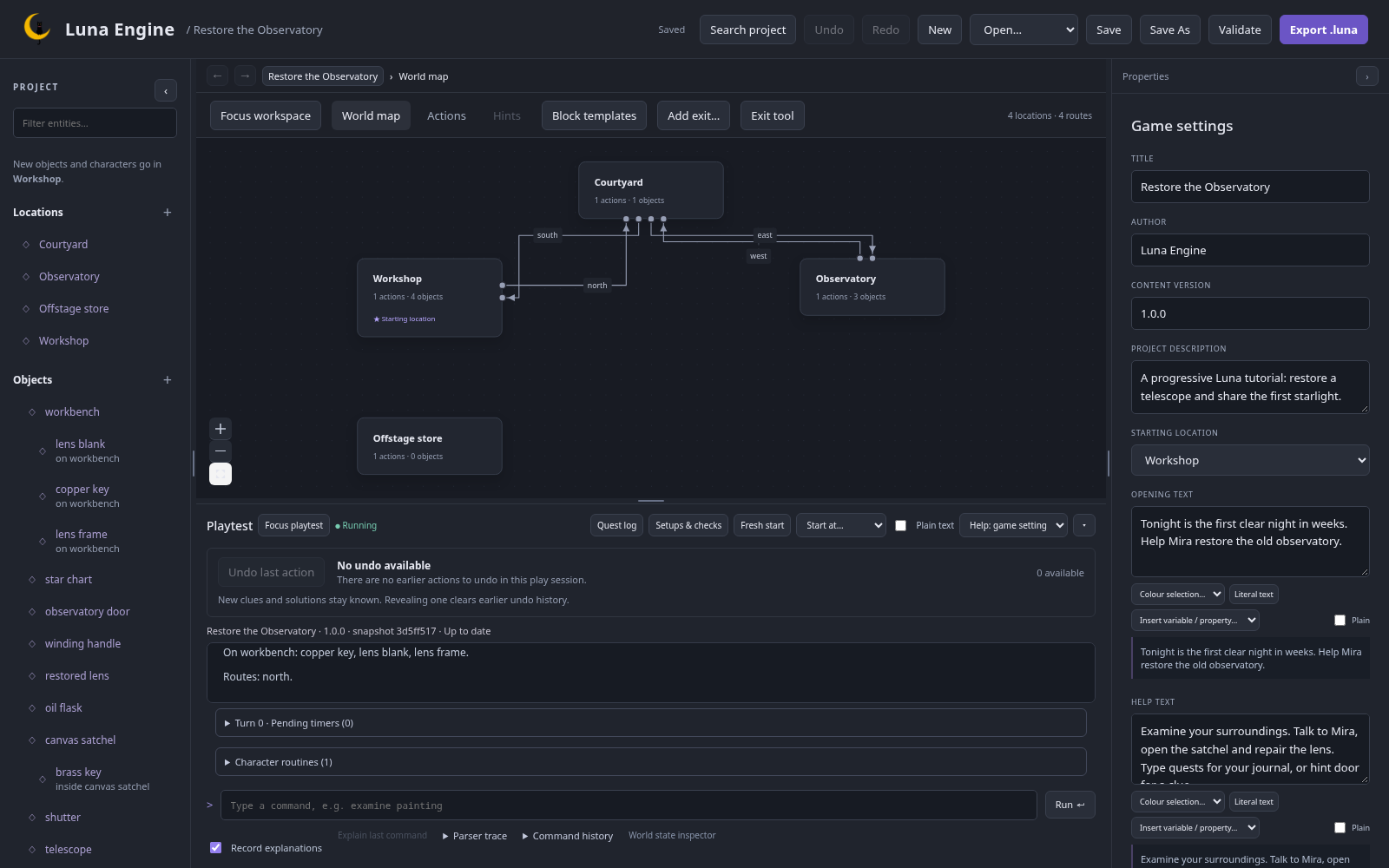
Luna Engine is for writing parser-driven interactive fiction, the kind of game where you type open the satchel and the world answers. You build the game in a visual editor that opens in your browser, and you share it as a single .luna file that players run in a terminal.
The editor and the runner use the same Rust engine, so a game behaves the same way while you write it as it does when someone plays it.
Making a game
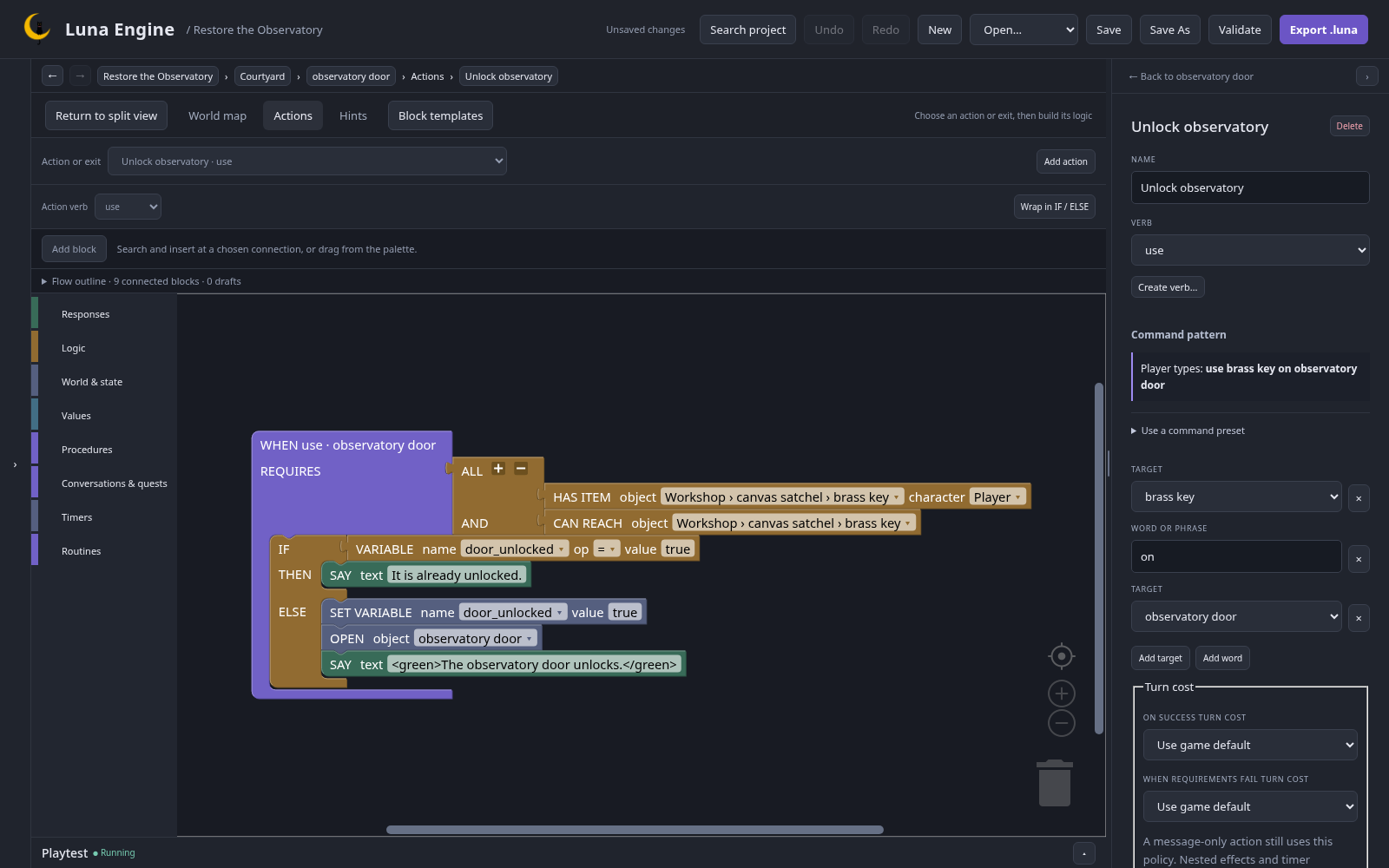
Start on the world map. Rooms are boxes, exits are lines between them, and objects sit inside rooms or inside each other: a key in a satchel on a workbench. When something should happen, such as a door that only opens once the lens is fixed, you describe it with Blockly blocks instead of code.
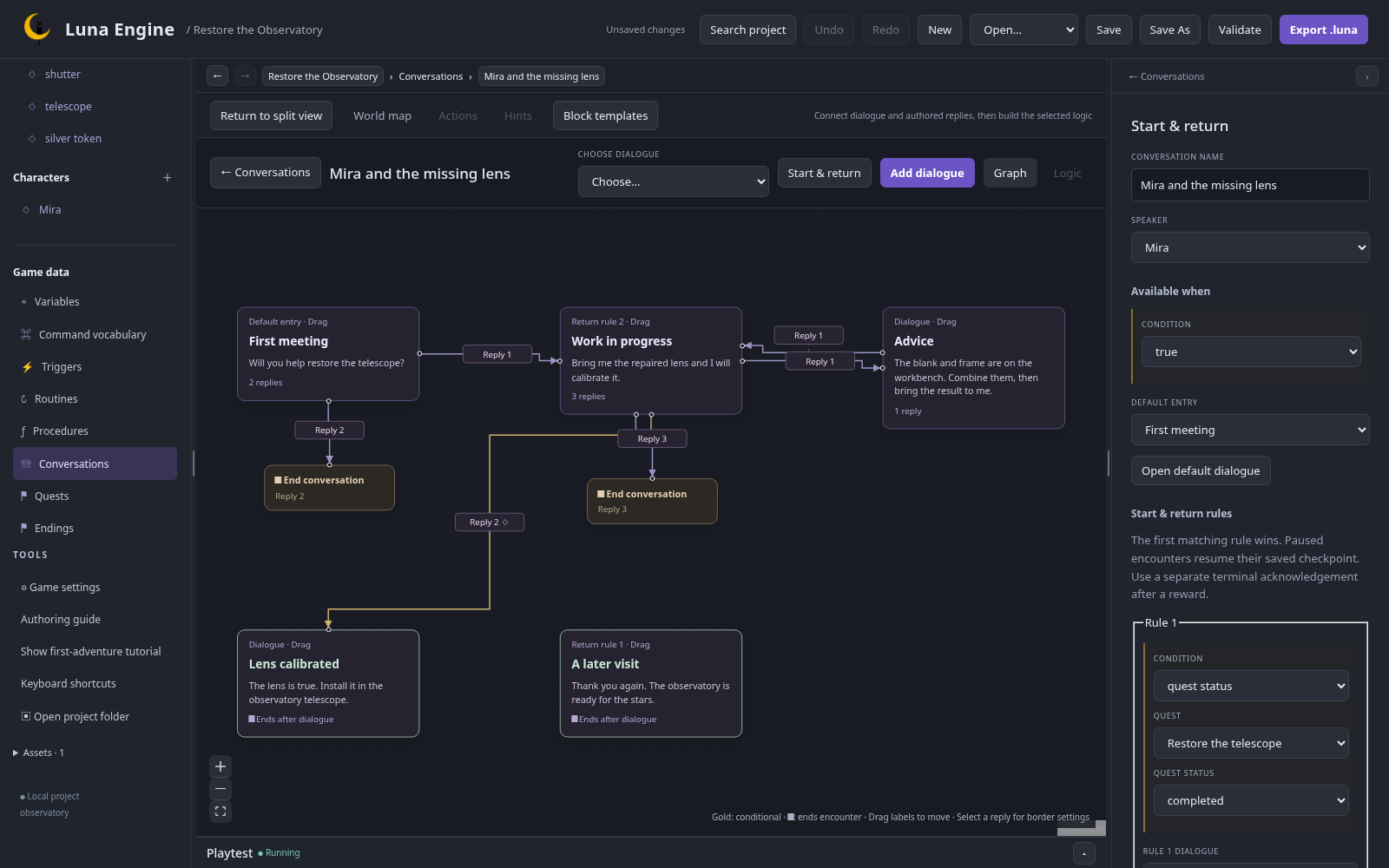
Beyond rooms and objects, Luna has conversations with branches, quests that show up in the player’s journal, hints that unlock in order, timers, and characters who follow routines of their own.
Testing as you go
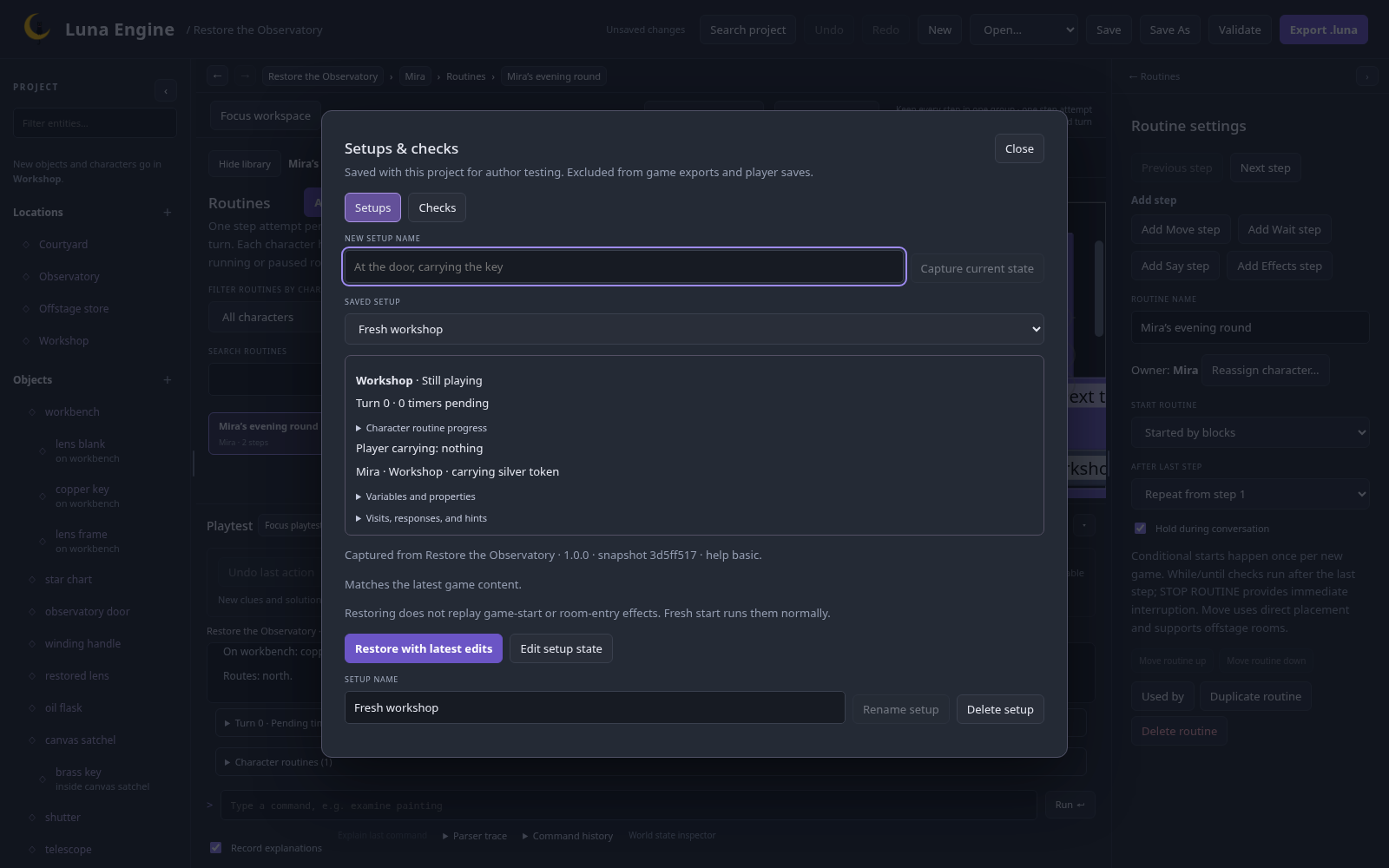
A playtest runs beside the editor the whole time. You can type commands into it, watch the game’s state change, and see why the parser read a command the way it did. When a puzzle works, save the run as a check, and Luna will replay it later to tell you if a change broke it.
Playing
Players don’t need Rust or Node. They download the runner for their platform, import a .luna file and play. Up and Down recall earlier commands, saves are kept locally, and /transcript records a session to a plain-text file.
The licence
Luna is source available under PolyForm Noncommercial, with an extra permission for games. You can make and sell your own games royalty-free, and ship the unmodified runner with them. Selling the engine or editor itself, or running a paid Luna service, needs separate permission.
Spec sheet
- Status
- Released, version 1.0.1, Oct 2026
- Runs on
- Linux x86_64. Windows and macOS builds are experimental and unsigned.
- Built with
- Rust engine and runner, browser editor with Blockly
- Licence
- Source available. Sell your own games royalty-free; the engine itself is noncommercial.